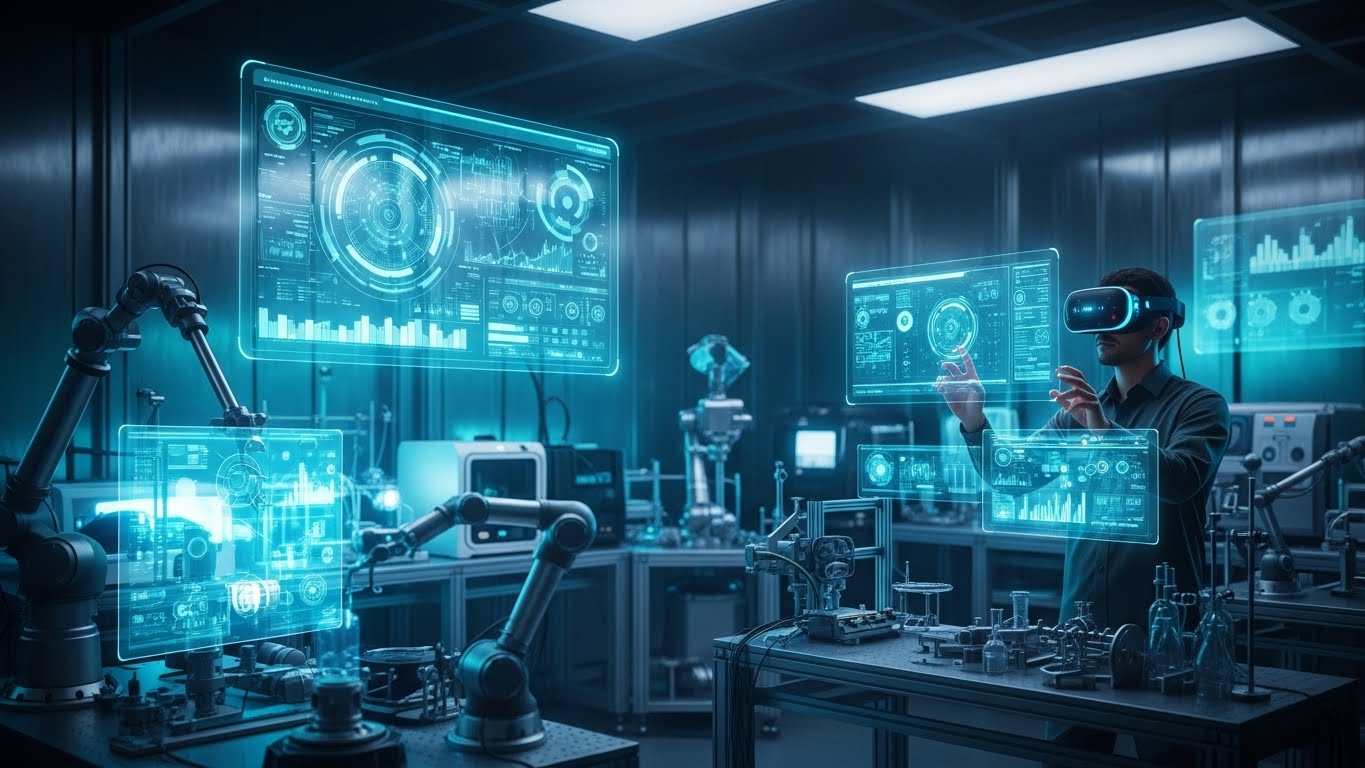

In the fast-paced world we live in, technology is no longer just a tool; it is the very fabric that weaves our daily lives together. From the way we communicate to the way we work, learn, and even think, the influence of technology is omnipresent. Yet, despite its ubiquity, many of us only scratch the surface of understanding how emerging technologies are poised to redefine the future. In this article, we will explore some of the most transformative tech trends, their impact on society, and the possibilities they present for the next generation.
Artificial Intelligence: The Brain of Modern Technology
Artificial Intelligence, or AI, has transitioned from science fiction to a practical reality that influences industries across the globe. Its applications range from simple automation tasks to complex decision-making processes that rival human capabilities. AI algorithms are now capable of understanding natural language, recognizing patterns in vast datasets, and even predicting future outcomes with remarkable accuracy.
In industries like healthcare, AI is revolutionizing diagnostics by analyzing medical images faster and more accurately than human radiologists. In finance, it powers fraud detection systems, ensuring that millions of transactions are monitored in real time. Even creative fields are not untouched, as AI-generated art and music challenge traditional notions of creativity.
What makes AI particularly fascinating is its potential for self-learning. Machine learning models can improve themselves over time, making decisions that are increasingly precise and context-aware. This adaptability ensures that AI will not only continue to enhance current processes but will also create entirely new ways of thinking about problem-solving.
Quantum Computing: Unlocking New Realms of Possibility
Quantum computing represents a paradigm shift in computational power. Unlike classical computers that rely on bits to process information as either zero or one, quantum computers use qubits, which can exist in multiple states simultaneously. This property, known as superposition, allows quantum machines to perform calculations at speeds previously thought impossible.
The implications of quantum computing are profound. Complex problems that would take traditional computers millennia to solve, such as protein folding or climate modeling, could be addressed in mere seconds. Industries ranging from pharmaceuticals to logistics stand to benefit immensely from this computational leap.
However, the path to practical quantum computing is not without challenges. Maintaining qubit stability, error correction, and scaling quantum systems are significant hurdles that scientists and engineers are working tirelessly to overcome. Nevertheless, the promise of quantum computing continues to drive investment and research worldwide, hinting at a future where the limits of computation are redefined.
Internet of Things: The Connected World
The Internet of Things, or IoT, refers to the network of physical devices embedded with sensors, software, and connectivity that allows them to collect and exchange data. From smart homes to industrial machinery, IoT has transformed how we interact with our environment.
Smart cities, powered by IoT, are becoming a reality. Traffic systems that adapt to real-time conditions, energy grids that optimize usage, and waste management systems that reduce environmental impact are just the beginning. In healthcare, wearable devices monitor vital signs and send alerts to patients and doctors, enabling proactive treatment.
One of the most compelling aspects of IoT is its potential for predictive analytics. By analyzing data streams from connected devices, systems can anticipate problems before they occur, improving efficiency and reducing costs. The seamless integration of IoT into daily life is not only convenient but also holds the key to sustainable urban living.
Blockchain Technology: Redefining Trust
Blockchain technology is often associated with cryptocurrencies, but its applications extend far beyond digital money. At its core, blockchain is a decentralized ledger that records transactions securely and transparently. This structure eliminates the need for intermediaries, reducing costs and increasing trust.
Supply chains are one area where blockchain has shown transformative potential. By recording every step of a product’s journey, blockchain ensures authenticity and reduces the risk of fraud. In finance, smart contracts automate agreements, reducing delays and minimizing human error. Even in voting systems, blockchain can enhance transparency and reduce the risk of tampering.
The decentralized nature of blockchain also promotes greater security. Unlike traditional databases, which are vulnerable to hacks and breaches, blockchain’s distributed network ensures that data is virtually immutable. As trust becomes an increasingly valuable commodity in the digital age, blockchain offers a compelling solution for a wide range of industries.
Augmented Reality and Virtual Reality: The New Digital Experience
Augmented Reality (AR) and Virtual Reality (VR) are transforming the way we experience the digital world. While VR immerses users in entirely virtual environments, AR overlays digital information onto the real world, creating an interactive blend of reality and imagination.
In education, AR and VR offer immersive learning experiences that engage students like never before. Medical students can practice surgeries in a virtual environment, while history lessons come alive through interactive simulations. In retail, AR allows customers to visualize products in their own homes before making a purchase, enhancing decision-making and customer satisfaction.
The entertainment industry is also being reshaped. VR gaming transports players into entirely new worlds, while AR enhances live events and performances with interactive digital content. As these technologies mature, they will continue to redefine how we work, learn, and play, bridging the gap between physical and digital experiences.
5G Technology: The Backbone of a Connected Future
The rollout of 5G networks marks a significant milestone in communication technology. Offering speeds up to 100 times faster than 4G and dramatically reduced latency, 5G enables seamless connectivity for a vast array of devices and applications.
In smart cities, 5G allows for real-time monitoring and control of infrastructure, from traffic management to energy distribution. In healthcare, remote surgeries and telemedicine consultations become feasible, providing access to high-quality care regardless of location. Industrial automation benefits as well, with factories capable of operating more efficiently through connected machines and predictive maintenance.
Beyond speed, 5G fosters innovation in areas such as autonomous vehicles, drone technology, and immersive media experiences. The proliferation of connected devices and the demand for instantaneous data exchange make 5G a crucial enabler for the technologies of tomorrow.
Sustainable Technology: Innovation with Responsibility
As technology advances, so does the need for sustainability. Emerging tech must not only drive innovation but also address the environmental challenges facing our planet. Renewable energy technologies, such as advanced solar panels and energy storage solutions, are making clean energy more accessible and efficient.
Electric vehicles are transforming transportation, reducing reliance on fossil fuels and decreasing greenhouse gas emissions. Smart grids and energy management systems ensure that resources are used efficiently, minimizing waste and environmental impact. Even in manufacturing, 3D printing and automation are reducing material usage and promoting circular economy practices.
Sustainable technology is not merely a trend; it is a necessity. As society becomes increasingly aware of its ecological footprint, the intersection of innovation and responsibility will define the future of technological development.
The Ethical Dimension of Emerging Technology
With great power comes great responsibility. The rapid advancement of technology raises critical ethical questions about privacy, security, and societal impact. AI decision-making, for instance, must be transparent and free from bias to ensure fairness. Blockchain applications need to balance decentralization with regulatory compliance. IoT devices must safeguard user data while providing seamless functionality.
Addressing these challenges requires collaboration between technologists, policymakers, and society at large. Ethical frameworks and regulations must evolve alongside innovation to prevent misuse and ensure that technology serves humanity’s best interests. Transparency, accountability, and inclusivity are essential components of this evolving ethical landscape.
The Road Ahead: Embracing the Future
The technologies discussed here represent just a fraction of the innovations reshaping our world. As AI, quantum computing, IoT, blockchain, AR/VR, 5G, and sustainable technologies continue to advance, the possibilities are virtually limitless.
Adapting to this rapid change requires curiosity, flexibility, and a willingness to learn. For individuals, it means embracing lifelong learning and staying informed about technological trends. For businesses, it means fostering innovation, agility, and ethical responsibility. For society, it means engaging in conversations about the impact of technology on our lives and the world around us.
The horizon of technology is expanding every day. By understanding its potential and preparing for its implications, we can harness these innovations to create a future that is not only technologically advanced but also equitable, sustainable, and profoundly human.