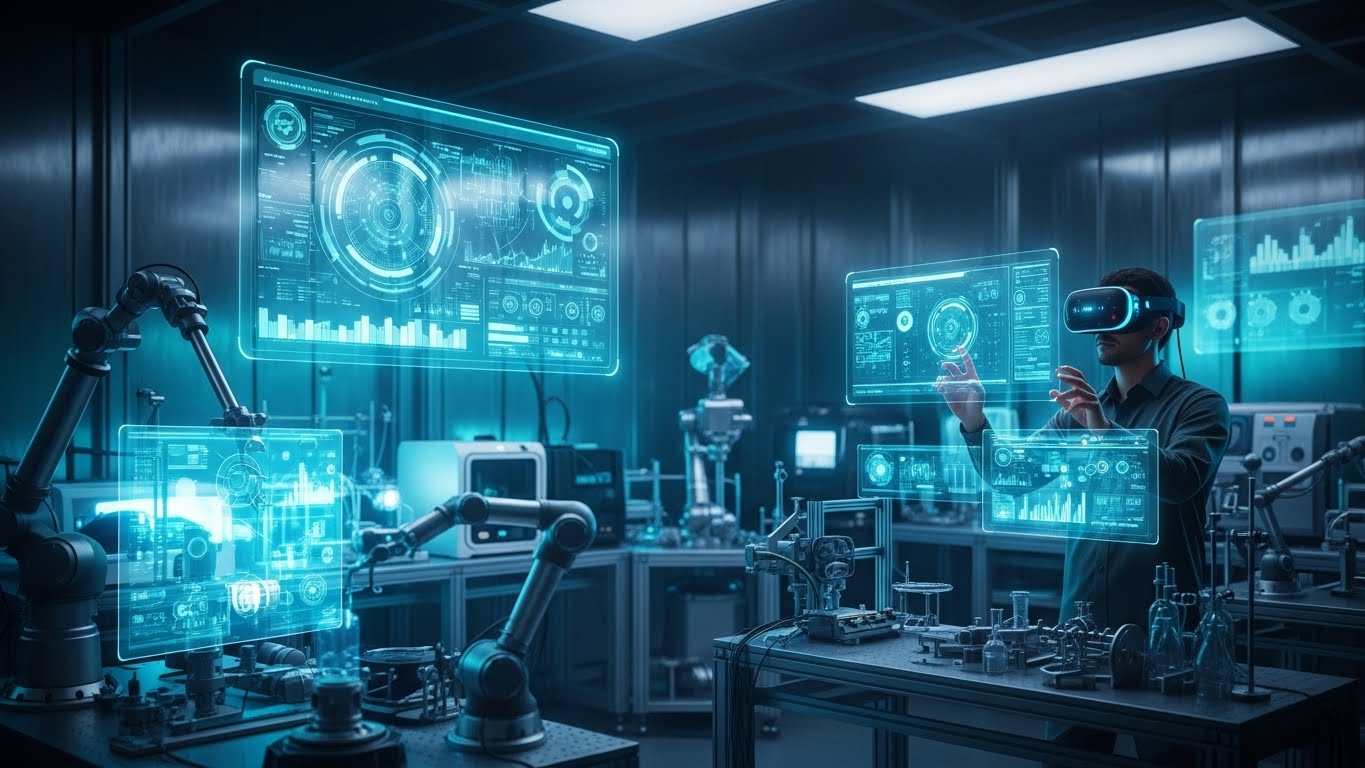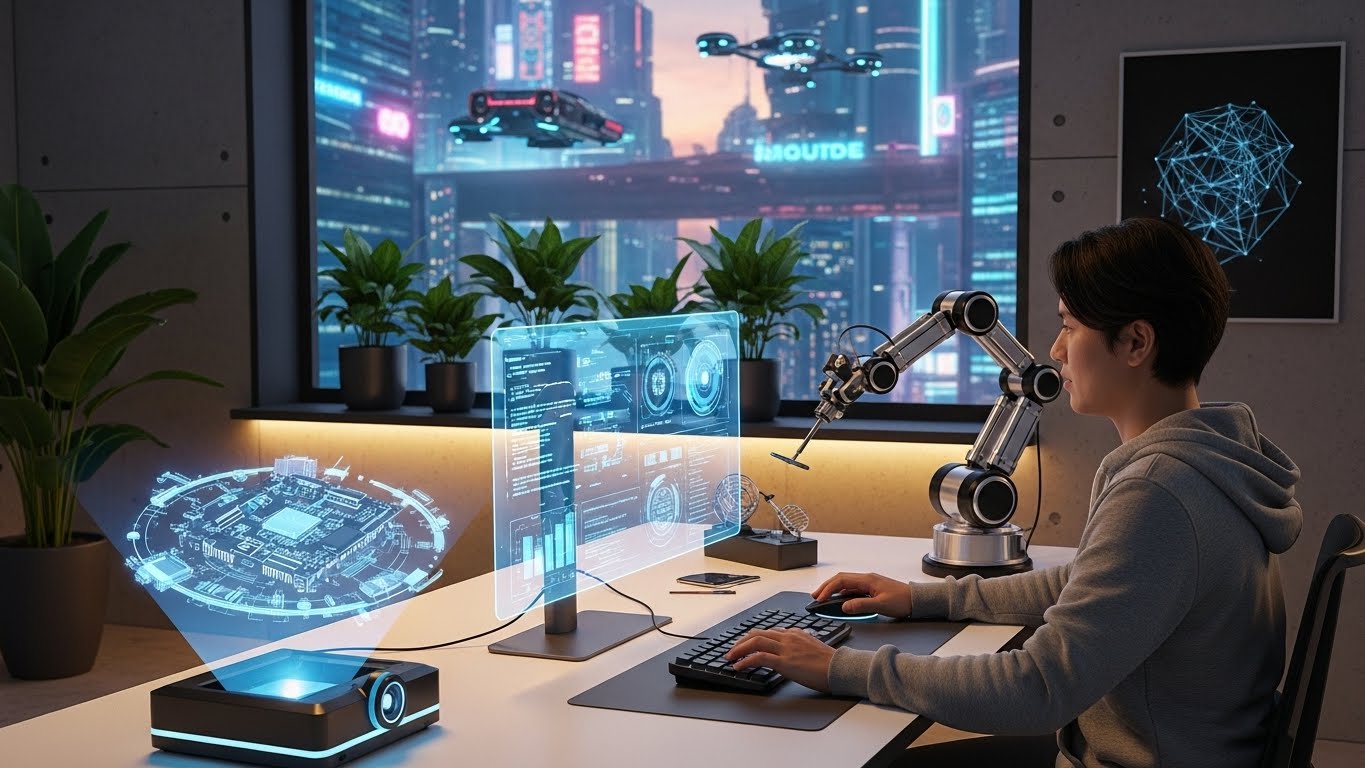

In a world where change is the only constant, technology continues to evolve at an unprecedented rate. What once seemed like the stuff of science fiction has become an everyday reality, from artificial intelligence and quantum computing to blockchain and augmented reality. As we move further into the 21st century, it’s clear that these emerging technologies are not just shaping our future—they are actively creating it. The question is no longer whether technology will change the world but how, and how quickly.
In this blog post, we will explore some of the most impactful emerging technologies today. We’ll take a deep dive into how they are transforming industries, societies, and even the way we think about ourselves as humans. From healthcare to education and beyond, the tech revolution is truly unstoppable, and understanding these changes is key to navigating the future successfully.
The Rise of Artificial Intelligence
Artificial intelligence (AI) has perhaps been the most talked-about technological advancement in recent years. While AI is far from new, its capabilities have grown exponentially, allowing for breakthroughs across numerous fields. AI systems can now perform tasks that were once considered uniquely human—everything from recognizing patterns in massive datasets to generating natural language text, and even driving cars autonomously.
One of the most significant impacts of AI is in the area of automation. In industries like manufacturing, logistics, and retail, AI-powered systems are streamlining processes, reducing costs, and improving efficiency. In healthcare, AI is being used to analyze medical images, predict patient outcomes, and even assist in drug discovery. With the help of machine learning algorithms, AI can sift through vast amounts of medical data to detect diseases earlier than ever before, providing patients with a better chance of recovery.
However, the rise of AI also raises important ethical questions. As AI systems become more autonomous, concerns about job displacement and the implications for privacy, bias, and accountability become even more pressing. Striking the right balance between innovation and regulation will be crucial in ensuring that AI serves society in a fair and equitable way.
Quantum Computing: The Next Frontier
If AI is a revolution, quantum computing is a revolution within a revolution. While still in its early stages, quantum computing promises to solve problems that classical computers simply cannot. Traditional computers rely on bits to process information, which can represent either a 0 or a 1. Quantum computers, on the other hand, use quantum bits (qubits), which can exist in multiple states simultaneously due to a phenomenon called superposition.
This ability to process information in parallel makes quantum computers incredibly powerful for certain types of calculations. For example, they could revolutionize fields such as cryptography, materials science, and drug discovery. Quantum computers have the potential to break encryption algorithms that are currently considered unbreakable, which could have profound implications for data security worldwide. In materials science, quantum simulations could help create new materials with properties that were previously unattainable, potentially leading to breakthroughs in energy storage, electronics, and even environmental sustainability.
Despite the excitement surrounding quantum computing, we are still in the early days of its development. Building a practical quantum computer requires overcoming numerous technical challenges, such as qubit stability and error correction. However, the progress made by companies like Google, IBM, and several universities suggests that a quantum computing breakthrough is on the horizon, with potentially transformative effects on many industries.
Blockchain Technology: More Than Just Cryptocurrency
When most people think of blockchain, they immediately think of cryptocurrency—most notably Bitcoin. However, blockchain technology is much more than just a digital currency platform. At its core, blockchain is a decentralized, secure way of recording transactions and storing data in a transparent and tamper-proof manner. Each transaction or piece of data is stored in a “block,” which is linked to the previous one, forming a chain.
Beyond its applications in cryptocurrency, blockchain is poised to revolutionize industries ranging from finance to supply chain management to voting systems. For instance, blockchain can be used to create secure and transparent financial transactions without the need for intermediaries like banks. This has the potential to lower transaction costs and increase financial inclusion, especially in developing countries where access to traditional banking services is limited.
In supply chain management, blockchain can ensure transparency and traceability, making it easier to track the origin of goods, monitor their movement, and verify their authenticity. This is especially valuable in industries like food safety, where knowing the exact origin of products can help prevent contamination and ensure consumer safety.
Blockchain also has the potential to improve the security and integrity of digital voting systems. With concerns about election tampering and fraud becoming more pronounced, a blockchain-based voting system could offer a transparent, immutable record of every vote cast, ensuring greater confidence in the electoral process.
Augmented Reality and Virtual Reality: Bridging the Digital and Physical Worlds
Augmented reality (AR) and virtual reality (VR) are two technologies that have been gaining traction in recent years, offering immersive experiences that blend the digital world with the physical one. While both AR and VR have been around for some time, the advances in hardware and software have made them more accessible and useful in a variety of applications.
In gaming and entertainment, VR has taken the experience of immersion to new heights. With VR headsets, users can step inside virtual worlds, experiencing everything from fast-paced action games to cinematic storytelling. For industries like education and training, VR offers opportunities to simulate real-world scenarios in a safe and controlled environment. Medical students, for example, can practice surgeries or medical procedures in VR before ever touching a real patient, significantly reducing the risks involved.
On the other hand, AR overlays digital information onto the physical world, enhancing the user’s interaction with their environment. For instance, AR can be used in retail, where customers can “try on” clothes virtually before making a purchase. In healthcare, AR can assist surgeons by providing real-time information and images during surgeries, improving accuracy and outcomes.
As AR and VR continue to evolve, they are expected to become even more integrated into our daily lives, from remote work and education to social interactions and entertainment. In the near future, we may see a world where physical and digital realities are seamlessly blended together.
The Internet of Things (IoT): Connecting the World
The Internet of Things (IoT) is the concept of embedding everyday objects with sensors and connectivity, allowing them to collect, exchange, and analyze data. IoT devices range from smart thermostats and wearables to connected cars and industrial machines. By making devices smarter and more interconnected, IoT has the potential to revolutionize industries, improve convenience, and even enhance sustainability.
One of the most visible examples of IoT in action is the smart home. Devices like Amazon Alexa, Google Home, and smart thermostats have made it easier for people to automate their living spaces, controlling everything from lighting and temperature to security and entertainment. As IoT continues to expand, the future of smart homes could include self-regulating systems that optimize energy usage and improve overall efficiency.
In healthcare, IoT-enabled medical devices like wearable heart monitors, glucose meters, and remote patient monitoring systems are helping doctors track patients’ health in real-time, enabling earlier detection of potential issues. Similarly, IoT has a significant role to play in industries like agriculture, where connected sensors can help farmers monitor crop health, soil moisture, and weather conditions, leading to more efficient and sustainable farming practices.
However, the proliferation of IoT devices also raises concerns about security and privacy. As more devices become connected to the internet, the potential for cyberattacks increases, and safeguarding personal data will be crucial to maintaining trust in these technologies.
5G Technology: The Backbone of Tomorrow’s Digital World
The rollout of 5G networks is set to revolutionize the way we connect to the internet and each other. 5G offers significantly faster data speeds, lower latency, and greater capacity compared to previous generations of wireless networks. This means that everything from video streaming and gaming to autonomous vehicles and remote surgeries will be faster, more reliable, and more efficient.
One of the most exciting aspects of 5G is its potential to unlock new possibilities for the Internet of Things (IoT). With 5G’s enhanced connectivity, millions of devices can be connected simultaneously without overwhelming the network. This will enable smart cities, where everything from traffic lights and public transportation to waste management and energy consumption is optimized through real-time data.
In the healthcare sector, 5G could enable remote surgeries and telemedicine with near-zero latency, allowing doctors to perform operations from miles away using robotic equipment. For industries like manufacturing, 5G’s speed and reliability will facilitate real-time monitoring and automation, driving efficiency and reducing downtime.
As 5G networks continue to expand globally, they will be the infrastructure that powers many of the other emerging technologies we’ve discussed, from AI and IoT to augmented reality and beyond.
Conclusion: A Future Driven by Technology
As we look ahead, it’s clear that the future will be shaped by the technologies we are developing today. Artificial intelligence, quantum computing, blockchain, augmented reality, the Internet of Things, and 5G networks are just a few of the innovations that will redefine how we live, work, and interact with the world around us.
While the rapid pace of technological advancement brings tremendous opportunities, it also presents challenges. Issues related to privacy, security, ethical considerations, and social impact must be carefully managed to ensure that technology benefits everyone, not just a select few.
Ultimately, we stand on the precipice of a new era—one where the possibilities are limited only by our imagination and our ability to harness technology for the greater good. As these technologies continue to evolve, they will undoubtedly open doors to innovations we can’t yet fathom, but one thing is certain: the future is now, and technology is at the heart of it all.