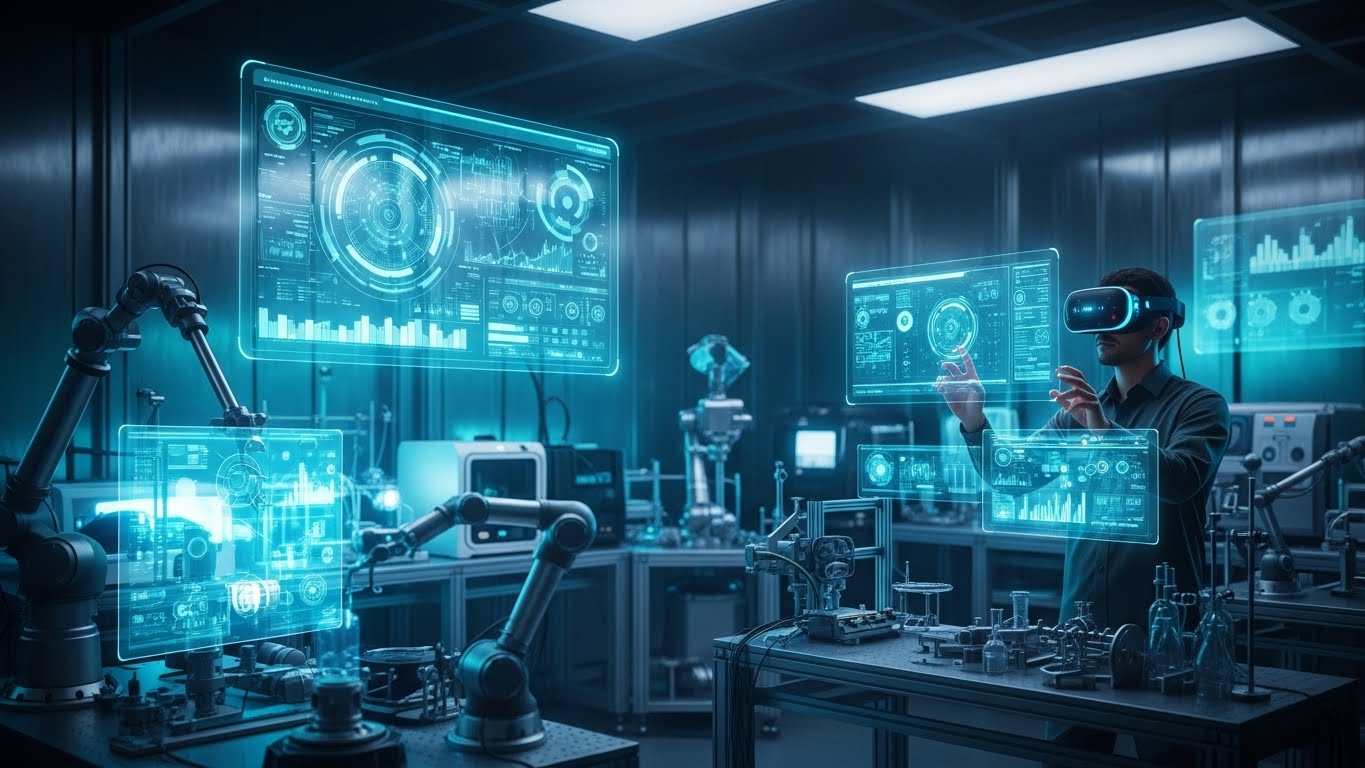

Technology is no longer just an accessory to our lives; it has become the foundation on which we build and experience everything from work to entertainment, communication, and even how we interact with the world around us. Over the past few decades, we’ve witnessed an unprecedented acceleration in technological advancements that have fundamentally changed our daily routines, habits, and even our expectations for the future. In this blog post, we’ll explore how emerging tech is shaping our lives and look at some of the most exciting innovations that are changing the way we live, work, and play.
The Power of Artificial Intelligence: Smarter, Faster, and More Personal
Artificial intelligence has moved beyond the realm of science fiction into something that’s now deeply embedded in our daily experiences. AI is increasingly responsible for automating tasks, offering personalized recommendations, and even assisting in decision-making across various industries. For instance, platforms like Netflix and Spotify use AI algorithms to recommend content based on your past behavior, while AI-powered chatbots are transforming customer service, providing faster and more accurate responses to customer inquiries.
One of the most fascinating developments in AI is the rise of “machine learning,” where systems are able to learn and adapt based on new data. This means AI can continuously improve itself without human intervention. In healthcare, AI is playing a crucial role by analyzing medical records and providing insights that help doctors diagnose diseases more accurately and at earlier stages. The potential for AI to enhance industries from education to transportation, entertainment to finance, is truly endless. But with these advancements come important ethical questions about job displacement, privacy, and AI’s role in decision-making.
The Internet of Things: Connecting Everything, Everywhere
The Internet of Things (IoT) refers to the growing network of devices connected to the internet, ranging from smart home appliances to wearable technology. These devices are equipped with sensors that allow them to collect and exchange data, enabling them to operate intelligently and efficiently. For example, a smart thermostat can learn your heating preferences over time and adjust the temperature to suit your routine, while fitness trackers can monitor your activity levels and provide insights to improve your health.
In industries such as agriculture, IoT is revolutionizing farming practices. Farmers now use IoT-powered sensors to monitor soil moisture, track weather patterns, and even automate irrigation systems. In cities, smart technologies powered by IoT help optimize traffic flow, monitor air quality, and improve energy efficiency. As more devices are connected, the IoT ecosystem continues to expand, promising a future where everything from our homes to our cities will be smarter and more responsive to our needs.
5G Networks: The Backbone of Tomorrow’s Connectivity
The arrival of 5G networks is set to revolutionize how we connect with the world around us. Promising faster speeds, lower latency, and greater capacity than current 4G networks, 5G will enable a new wave of technological innovations. This new generation of connectivity will empower everything from autonomous vehicles to the remote control of industrial machinery and even the deployment of smart city infrastructure.
One of the most exciting possibilities offered by 5G is its potential to support the growing demands of augmented reality (AR) and virtual reality (VR). With faster data transfer speeds and lower latency, 5G will allow for seamless, immersive experiences in real-time. Whether it’s VR gaming, remote surgery, or real-time collaboration in virtual environments, the speed and reliability of 5G networks will make these experiences not just possible, but practical for the mass market.
Blockchain Technology: A New Era of Transparency and Security
Blockchain technology, the foundation of cryptocurrencies like Bitcoin, has far-reaching potential beyond just digital currencies. Essentially, blockchain is a decentralized, distributed ledger that allows data to be securely stored and shared across multiple computers. This makes it incredibly difficult to alter or tamper with information, creating an unprecedented level of transparency and security.
One of the most promising applications of blockchain is in supply chain management. By tracking goods as they move through each stage of production and distribution, blockchain can reduce fraud, improve traceability, and streamline operations. In industries like healthcare, blockchain can be used to store patient records securely while ensuring they are easily accessible by authorized personnel. The promise of blockchain goes beyond just security—its ability to enhance transparency and build trust is reshaping everything from finance to voting systems.
Quantum Computing: Pushing the Boundaries of What’s Possible
Quantum computing is one of the most exciting and mysterious fields of technology. Unlike traditional computers, which process information using binary bits (ones and zeros), quantum computers use quantum bits, or qubits, which can exist in multiple states at once. This allows quantum computers to perform complex calculations much faster than classical computers, solving problems that would otherwise take centuries to process.
Currently, quantum computing is in its early stages, but its potential for solving some of the world’s most pressing problems is immense. From drug discovery to climate modeling and cryptography, quantum computers could solve problems that are currently beyond the capabilities of traditional supercomputers. While practical, large-scale quantum computers are still years away, researchers are making significant strides toward harnessing the power of quantum mechanics in real-world applications.
Tech for Sustainability: Innovations That Tackle Global Challenges
As the world grapples with climate change and environmental degradation, technology is stepping up to help create sustainable solutions. Renewable energy technologies like solar, wind, and hydroelectric power are becoming more efficient and affordable, leading the way in reducing our reliance on fossil fuels. Electric vehicles (EVs) are becoming more mainstream, contributing to a reduction in carbon emissions from transportation.
In addition to energy solutions, technology is also helping address waste management and conservation efforts. Innovations in recycling technology are making it easier to process materials like plastics and e-waste, while AI and machine learning are being used to optimize resource use and reduce waste in industries like manufacturing and agriculture. As tech continues to advance, it holds the promise of not only improving our quality of life but also ensuring a more sustainable future for generations to come.
Conclusion: Embracing the Future of Tech
The rapid pace of technological innovation is transforming the way we live, work, and interact with the world around us. From artificial intelligence and the Internet of Things to blockchain, quantum computing, and sustainability efforts, technology is reshaping industries and society in profound ways. While these innovations bring exciting opportunities, they also raise important questions about ethics, security, and the impact on our daily lives.
As we continue to embrace these new technologies, it’s essential that we remain mindful of their potential risks and challenges. The future of tech is bright, but it requires responsible development and thoughtful integration into society. By fostering a balanced approach to innovation, we can ensure that technology continues to enhance our lives, drive positive change, and create a more connected and sustainable world.