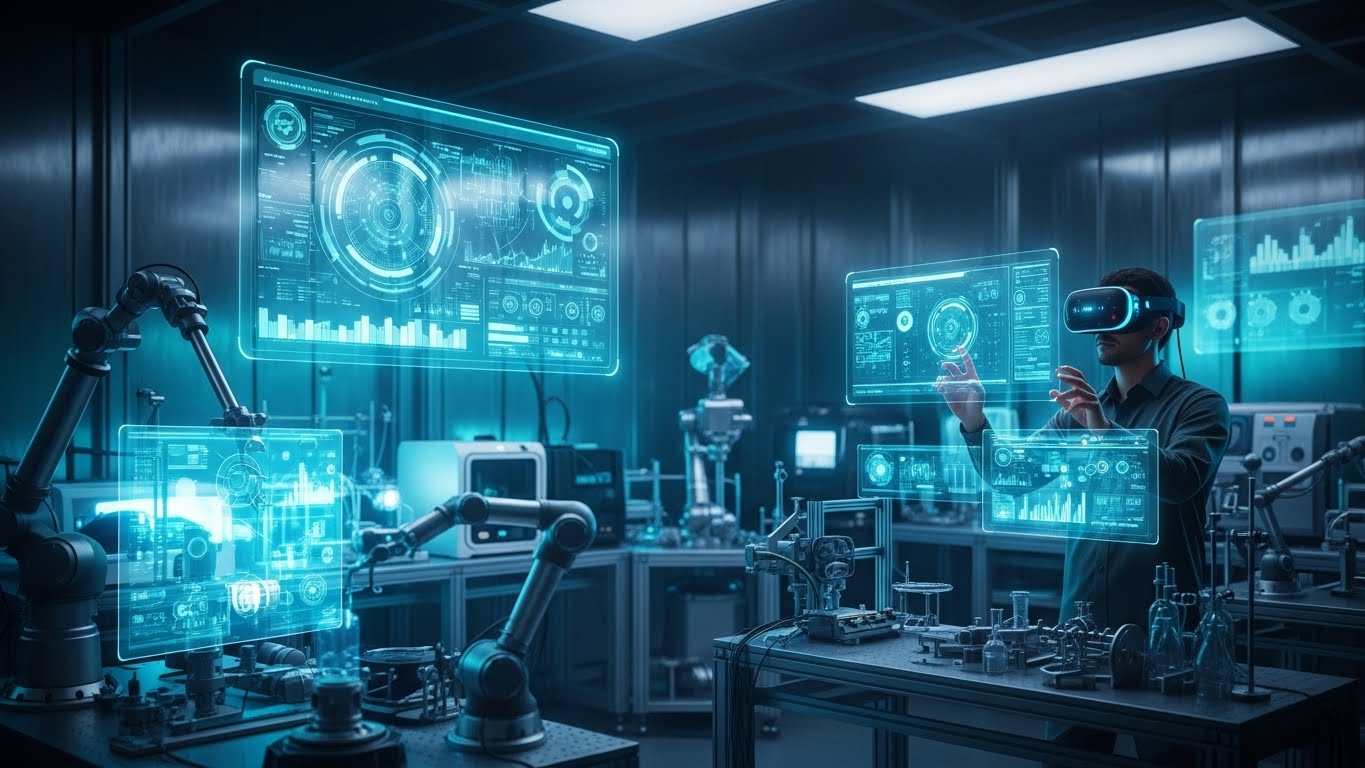

Technology has always been a driving force behind human progress. From the first wheel to the rise of the internet, innovations have consistently shaped the world around us. Today, we are in the midst of another quiet revolution—one that promises to change everything from how we work and live to how we communicate and interact with the world. In this blog post, we’ll dive into some of the most exciting emerging technologies that are quietly but powerfully reshaping our future.
The Power of Artificial Intelligence in Everyday Life
Artificial intelligence (AI) is no longer just a buzzword reserved for science fiction. It is here, and it’s making a significant impact on our daily lives. From AI-powered voice assistants like Siri and Google Assistant to personalized recommendations on platforms like Netflix and YouTube, AI is quietly embedded in almost everything we do.
One of the most fascinating aspects of AI is its ability to adapt and learn. For instance, AI algorithms analyze massive amounts of data to predict consumer behavior, streamline business operations, and even improve healthcare outcomes. In medicine, AI is helping doctors detect diseases faster and with greater accuracy by analyzing medical images. In customer service, AI chatbots can now resolve customer issues in real-time, improving the user experience while reducing operational costs for businesses.
As AI technology continues to advance, we can expect it to evolve from basic automation into systems that understand context, emotions, and complex human behavior. This will lead to more intuitive interactions between humans and machines, changing industries ranging from healthcare to entertainment and beyond.
The Rise of 5G and Its Transformative Impact
You’ve probably heard about 5G, but what exactly is it, and why is it such a big deal? 5G, the fifth generation of mobile network technology, is set to transform the way we connect to the internet. With speeds up to 100 times faster than 4G, 5G promises to deliver seamless connectivity for everything from smartphones to smart cities.
The key advantage of 5G is its ultra-low latency. This means data can be transmitted almost instantly, allowing for real-time communication and interaction. In practical terms, this will impact industries like healthcare, where remote surgeries could become more accurate and safer, or in autonomous vehicles, where cars can communicate with each other in real time to avoid accidents.
Moreover, the increased bandwidth of 5G will support the Internet of Things (IoT), where billions of devices—from refrigerators to factory machines—can be connected and share data instantaneously. With 5G, we are moving toward a hyper-connected world where everything is integrated, smarter, and more efficient.
Blockchain Beyond Cryptocurrency
When most people think of blockchain, the first thing that comes to mind is Bitcoin and other cryptocurrencies. While blockchain technology is the foundation for these digital currencies, its potential reaches far beyond the world of finance. Blockchain is essentially a decentralized, immutable ledger that records transactions in a secure and transparent way, making it ideal for applications that require a high level of trust.
One of the most exciting uses of blockchain outside of cryptocurrency is in supply chain management. By using blockchain, companies can trace the origin of products, ensuring they come from ethical and sustainable sources. In industries like healthcare, blockchain can be used to securely share patient records between doctors and hospitals, ensuring privacy and improving care coordination.
Furthermore, blockchain has the potential to revolutionize voting systems. By providing a secure, transparent way to cast votes, blockchain can help eliminate fraud and increase voter confidence in the electoral process. While we’re still in the early stages of adoption, blockchain’s ability to ensure transparency and trust is opening up new possibilities for industries across the board.
The Evolution of Wearable Tech: From Fitness to Health Monitoring
Wearable technology has been around for a while, but recent advancements are making these devices more powerful and capable than ever before. What started as simple fitness trackers has evolved into sophisticated health monitoring systems that can track everything from heart rate to sleep quality, and even stress levels.
Today’s smartwatches, like the Apple Watch and Fitbit, are equipped with sensors that can monitor a user’s blood oxygen levels, detect abnormal heart rhythms, and alert them if there’s an issue. For instance, the Apple Watch can send a notification to the wearer if it detects an irregular heartbeat, potentially saving lives by prompting individuals to seek medical attention.
In the future, we can expect wearable technology to become even more advanced, with sensors capable of monitoring additional health metrics such as blood sugar levels or hydration. These devices could help people manage chronic conditions, provide real-time feedback on their well-being, and even assist in the early detection of health issues.
Augmented and Virtual Reality: The New Frontier of Experience
Augmented reality (AR) and virtual reality (VR) are technologies that are quickly changing how we experience the world. While VR immerses users in a completely virtual environment, AR overlays digital content on the physical world, enhancing what we see and interact with.
In entertainment, VR has created new forms of immersive experiences, allowing users to step inside games or movies in ways that were never before possible. VR headsets are becoming more affordable and accessible, bringing new opportunities for gamers, educators, and businesses alike.
AR, on the other hand, is already transforming industries like retail and education. In retail, AR allows customers to visualize how furniture, clothing, or makeup will look on them or in their homes before making a purchase. In education, AR can bring textbooks to life by overlaying 3D models and interactive elements on the page, making learning more engaging and effective.
As both AR and VR technologies continue to mature, we will see even more integration into our everyday lives, with applications in healthcare, design, and even social interaction. The potential for these technologies to reshape how we work, learn, and play is immense.
Quantum Computing: The Next Evolution in Processing Power
Quantum computing is often described as the next frontier in computing power. Unlike classical computers, which use bits to process data as either 0 or 1, quantum computers use quantum bits (qubits), which can exist in multiple states simultaneously. This ability to process vast amounts of data at once gives quantum computers the potential to solve complex problems that would take classical computers millions of years.
Although quantum computing is still in its infancy, the potential applications are mind-boggling. In fields like drug discovery, quantum computers could simulate molecular structures at an unprecedented level of detail, helping scientists develop new medications faster. In climate modeling, quantum computers could analyze vast datasets to predict weather patterns with much greater accuracy.
While we’re still years away from fully realizing the power of quantum computing, researchers are making significant strides. As quantum technology matures, it could unlock new possibilities in fields ranging from artificial intelligence to materials science and beyond.
Conclusion: Embracing the Quiet Revolution
The technological innovations mentioned in this blog post represent just a small fraction of the quiet revolution happening around us. From AI and blockchain to wearable tech and quantum computing, these technologies are silently transforming our lives, making our homes smarter, our health better monitored, and our interactions more immersive.
While the future may seem uncertain, one thing is clear: technology will continue to advance, and its impact will only grow. As we look ahead, it’s essential to embrace these innovations while also considering the ethical implications they bring. With careful thought and responsible adoption, these emerging technologies can help create a brighter, more connected future for us all.