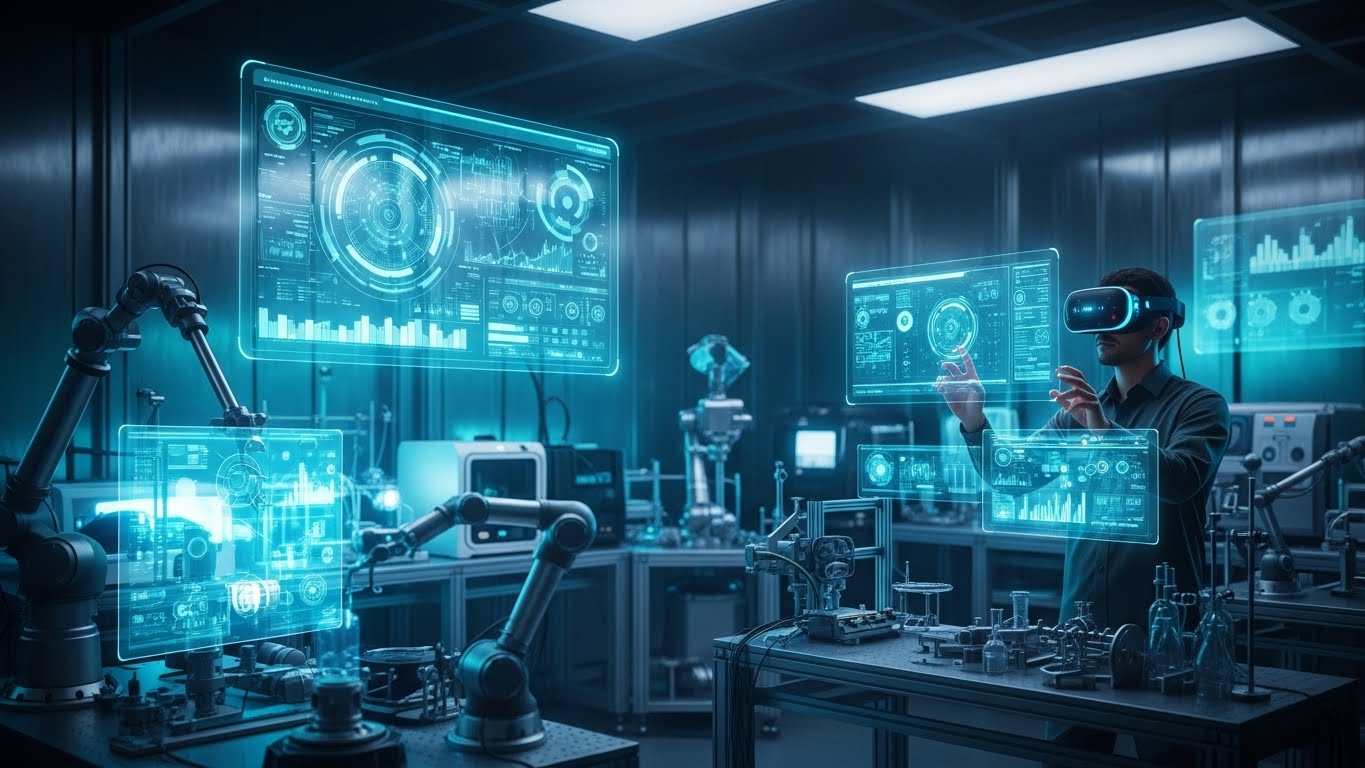
The rapid pace of technological advancement has drastically altered every aspect of our lives—from the way we communicate to how we work, shop, and even entertain ourselves. As we enter an era dominated by innovations such as artificial intelligence, blockchain, quantum computing, and the Internet of Things (IoT), the question isn’t whether technology will impact us, but how deeply and in what ways it will shape the future. In this post, we’ll explore the key technological developments that are set to redefine our world and examine how they will influence industries, societies, and individual lives.
The Rise of Artificial Intelligence: From Sci-Fi to Reality
Artificial Intelligence (AI) has long been the stuff of science fiction. However, in recent years, AI has moved from theoretical research to real-world applications, profoundly influencing industries from healthcare to finance and beyond.
1. AI in Healthcare: Revolutionizing Diagnosis and Treatment
AI’s most profound impact can be felt in the healthcare industry. Machine learning algorithms are now capable of analyzing vast amounts of medical data to diagnose diseases more accurately than ever before. AI-powered tools are helping doctors identify patterns in medical images, predict the likelihood of certain conditions, and even suggest treatment plans based on a patient’s medical history and genetic makeup.
The application of AI in drug discovery is also accelerating the development of new treatments. AI can rapidly analyze the molecular structures of potential drugs, speeding up the process of finding effective medications. This has the potential to dramatically improve patient outcomes and reduce the time and costs associated with bringing new drugs to market.
2. AI in Automation: Changing the Workforce Landscape
One of the most talked-about impacts of AI is its role in automation. Industries like manufacturing, logistics, and even customer service are increasingly turning to AI and robotics to handle repetitive tasks. This shift is reshaping the workforce, with jobs that once required human labor now being done by machines.
While this may lead to job displacement in some sectors, it also opens up new opportunities in fields like AI programming, robotics maintenance, and data analysis. The future of work will likely see humans collaborating with AI systems to accomplish more complex tasks, rather than being completely replaced by machines.
3. AI Ethics: Navigating the Challenges
With AI becoming more integrated into our daily lives, questions around ethics and accountability are emerging. Issues like privacy, bias in algorithms, and the potential for AI-driven decisions to impact human rights are at the forefront of discussions surrounding the responsible use of AI. As we continue to develop more advanced AI systems, it’s critical that developers, policymakers, and society as a whole ensure that these technologies are used ethically and transparently.
Blockchain: Beyond Cryptocurrency
Blockchain technology, originally designed as the underlying architecture for cryptocurrencies like Bitcoin, has since found applications in a wide variety of sectors, from supply chain management to voting systems and beyond.
1. Blockchain in Finance: Disrupting Traditional Systems
The most well-known application of blockchain technology is in cryptocurrencies, which offer decentralized, peer-to-peer transactions. However, the blockchain itself—the digital ledger that records these transactions—is where the real innovation lies. By creating a secure, transparent, and immutable record of transactions, blockchain has the potential to disrupt traditional financial systems.
In banking and finance, blockchain can eliminate the need for intermediaries like banks, reducing transaction fees and increasing the speed of money transfers. Smart contracts, which are self-executing contracts with terms directly written into code, can streamline agreements and reduce the risk of fraud.
2. Blockchain in Supply Chain Management: Enhancing Transparency
Another significant application of blockchain is in supply chain management. By tracking goods as they move from manufacturer to consumer, blockchain technology can provide transparency at every step of the supply chain. This can help reduce fraud, ensure the authenticity of products, and improve efficiency in inventory management.
For industries like food production, blockchain allows consumers to trace the origin of their food, ensuring its safety and quality. Similarly, in industries like pharmaceuticals, blockchain helps verify the authenticity of drugs, preventing counterfeit products from entering the market.
3. Blockchain for Secure Voting: Ensuring Integrity in Elections
Blockchain has the potential to revolutionize voting systems, making elections more secure, transparent, and resistant to fraud. By creating an immutable, digital ledger of votes, blockchain can ensure the integrity of election results and reduce the risk of tampering. Additionally, blockchain could allow for remote voting, making it more convenient and accessible for people to participate in democratic processes.
Quantum Computing: The Next Frontier in Technology
While still in its infancy, quantum computing promises to revolutionize computing as we know it. Unlike traditional computers, which use bits to represent data as 0s and 1s, quantum computers use quantum bits, or qubits, which can exist in multiple states simultaneously. This gives quantum computers the potential to solve problems that are currently unsolvable with classical computers.
1. Quantum Computing in Research and Development
Quantum computers have the potential to accelerate breakthroughs in various fields, from drug discovery to material science. For example, quantum computers could simulate the behavior of molecules and atoms with much greater accuracy, helping scientists develop new materials and medicines at a faster rate. This could significantly reduce the time required for R&D in industries like pharmaceuticals and manufacturing.
2. Quantum Computing in Cybersecurity
Another promising application of quantum computing is in the field of cybersecurity. While quantum computers could potentially break current encryption algorithms, they also have the ability to create unbreakable encryption methods. This could lead to a new era of secure communication, where information can be transmitted without fear of interception or hacking. However, this also poses challenges, as governments and businesses will need to update their cybersecurity protocols to account for quantum threats.
3. The Road to Quantum Supremacy
Despite the vast potential of quantum computing, we are still years, if not decades, away from realizing its full capabilities. Current quantum computers are prone to errors and require extremely cold temperatures to function. However, with ongoing advancements in the field, quantum computing could become a key player in solving some of humanity’s most complex problems.
The Internet of Things (IoT): Connecting Everything
The Internet of Things (IoT) is another technological development that is rapidly changing how we live and work. IoT refers to the network of physical devices—ranging from home appliances to industrial machinery—that are embedded with sensors and connected to the internet.
1. Smart Homes: Making Our Lives More Convenient
One of the most visible applications of IoT is in the creation of smart homes. From voice-controlled assistants like Amazon Alexa and Google Assistant to smart thermostats and security systems, IoT is making it easier to automate and control everyday tasks. For example, smart thermostats can learn your preferences and adjust the temperature in your home accordingly, helping you save energy and reduce costs.
The integration of IoT in homes extends to appliances like refrigerators, ovens, and washing machines, which can now send notifications or even make decisions on your behalf. The idea is to create a more connected, efficient, and user-friendly environment, where everything works seamlessly together.
2. Industrial IoT: Improving Efficiency and Safety
IoT is also having a profound impact on industries like manufacturing, transportation, and agriculture. In the industrial sector, IoT devices can monitor machinery, track inventory, and predict maintenance needs. This leads to improved operational efficiency, reduced downtime, and lower costs.
In agriculture, IoT-enabled sensors can monitor soil moisture levels, weather patterns, and crop health, allowing farmers to make more informed decisions and improve yields. Similarly, in the transportation industry, IoT technology is being used to optimize delivery routes, track shipments in real-time, and reduce fuel consumption.
3. IoT and Data Privacy: Addressing Security Concerns
While IoT holds immense promise, it also raises concerns about data privacy and security. As more devices become interconnected, the potential for cyberattacks increases. Hackers could exploit vulnerabilities in IoT devices to gain access to personal information or even control physical systems. Therefore, it is essential that robust security measures be implemented to protect users and their data from cyber threats.
Conclusion: Embracing the Tech Revolution
The technological advancements of today are setting the stage for an exciting future. From AI that enhances our lives and blockchain that transforms industries to quantum computing that promises to revolutionize our understanding of the world, the possibilities are virtually limitless. However, these innovations also bring challenges that must be addressed, particularly in terms of ethics, privacy, and security.
As we embrace these technologies, it’s crucial that we do so with foresight, responsibility, and a commitment to creating a future where innovation serves humanity’s best interests. The tech revolution is just beginning, and the impact it will have on our lives is bound to be profound. The question is not whether we can harness this potential, but how well we can adapt and shape it to benefit all of society.