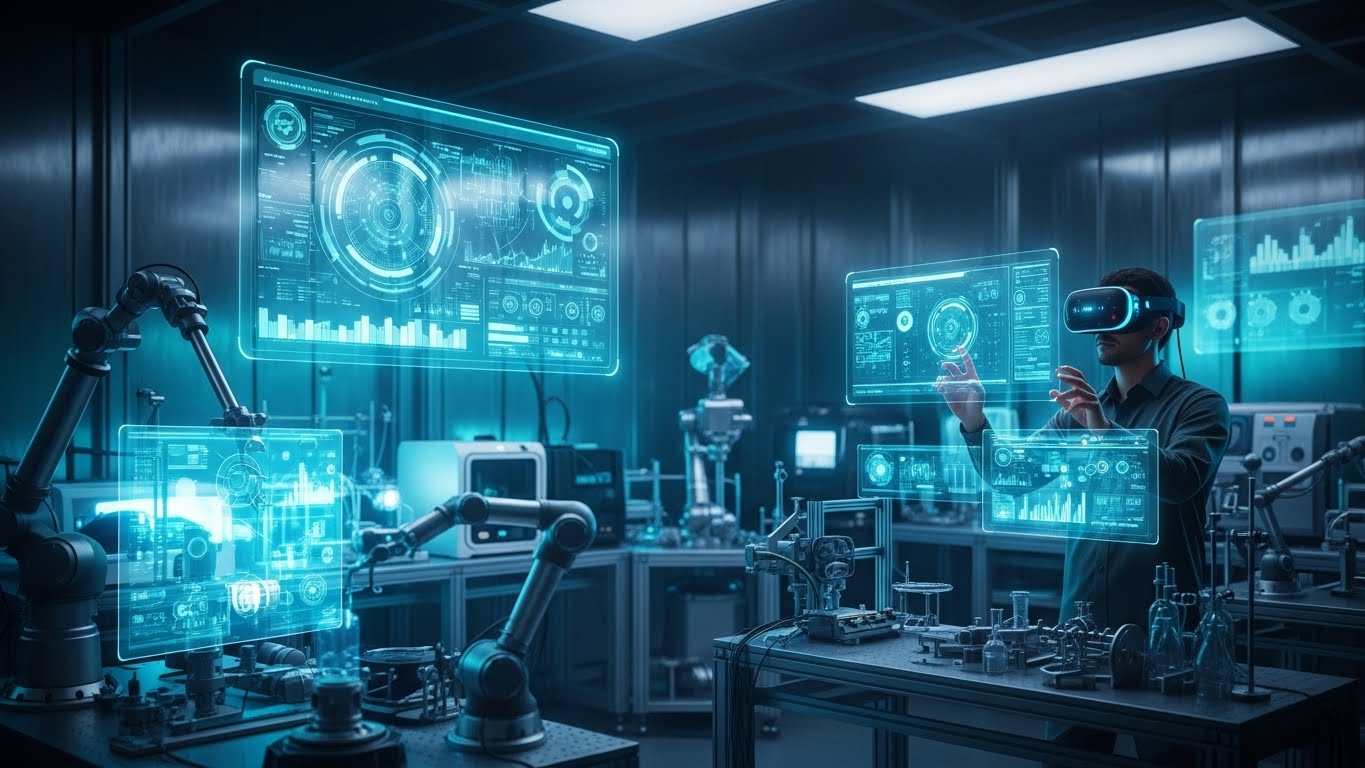

Introduction: A World Transformed by Technology
In the past few decades, technology has evolved at an unprecedented rate, transforming virtually every aspect of our lives. From the way we communicate to how we work, learn, shop, and even entertain ourselves, the technological advancements of today have reshaped the world in ways once thought impossible. What was once science fiction is now part of our daily reality, and the rapid pace of innovation shows no signs of slowing down.
This blog post delves into the current state of technology, its impact on society, and the trends shaping the future. Whether it’s artificial intelligence (AI), quantum computing, renewable energy tech, or the rise of 5G, technology is not just changing how we live but is also creating new opportunities, challenges, and ethical questions. Let’s explore how technology is redefining our future.
The Rise of Artificial Intelligence: Revolutionizing Every Sector
Artificial intelligence is one of the most talked-about technological advancements in recent years, and for good reason. AI is already influencing nearly every sector, from healthcare and finance to retail and transportation. In essence, AI involves creating machines or software that can perform tasks that typically require human intelligence, such as understanding natural language, recognizing images, making decisions, and even solving complex problems.
AI’s potential in healthcare is immense. With the help of machine learning algorithms, doctors can now diagnose diseases more accurately and quickly. AI-driven systems can analyze medical images, predict patient outcomes, and even recommend personalized treatments. Additionally, the use of AI in drug discovery is speeding up the process of developing life-saving medications, potentially saving countless lives.
In the realm of business, AI is changing the way companies operate. From automating repetitive tasks to enhancing customer experiences with chatbots and virtual assistants, AI is making businesses more efficient and productive. Companies like Amazon and Google are leading the charge with their AI-powered systems, which improve everything from inventory management to targeted advertising.
Moreover, the development of AI-powered autonomous vehicles promises to revolutionize transportation, reducing traffic accidents and improving mobility for people with disabilities or the elderly.
Quantum Computing: The Next Frontier in Technology
While AI dominates much of the conversation today, another technology, still in its early stages, has the potential to completely reshape the digital landscape—quantum computing. Quantum computers use the principles of quantum mechanics to process information in fundamentally different ways than classical computers.
Traditional computers use bits to represent data, either as a 0 or a 1. Quantum computers, however, use quantum bits, or qubits, which can exist in multiple states simultaneously, thanks to a phenomenon called superposition. This allows quantum computers to solve certain complex problems far more efficiently than traditional computers.
The applications of quantum computing are vast. In the field of cryptography, quantum computers could potentially break encryption methods that protect sensitive data. On the flip side, they could also be used to develop new, more secure forms of encryption. Quantum computers could revolutionize fields such as drug discovery, materials science, and climate modeling, by solving problems that are currently beyond the capabilities of classical computers.
However, quantum computing is still in its infancy. Building a stable and scalable quantum computer remains one of the biggest challenges in modern science. Yet, significant investments are being made by tech giants like IBM, Google, and Microsoft, which suggests that the next few decades could see quantum computing evolve from a research project to a mainstream tool.
The 5G Revolution: Connecting the World Like Never Before
5G technology is the next major step in the evolution of mobile networks. Building on the foundation of 4G, 5G promises faster speeds, lower latency, and a more reliable connection, making it a game-changer for various industries. This technology is expected to have a far-reaching impact, from improving mobile experiences to enabling innovations in fields like autonomous vehicles, smart cities, and healthcare.
One of the key benefits of 5G is its speed. With download speeds up to 100 times faster than 4G, 5G can support data-heavy applications, such as high-definition streaming, virtual reality (VR), and augmented reality (AR), without any lag or buffering. This opens up new possibilities for entertainment, education, and even remote work.
In healthcare, 5G could enable telemedicine to reach its full potential, providing real-time, high-quality video consultations between doctors and patients, even in remote or underserved areas. Additionally, the technology could enable the widespread use of remote surgery, where surgeons can operate on patients from a distance with minimal delay.
For industries like transportation, 5G will make autonomous vehicles a reality by allowing vehicles to communicate with each other and their surroundings in real-time. This will improve safety, reduce traffic congestion, and ultimately change the way we think about mobility.
The Role of Renewable Energy Tech in Combating Climate Change
One of the most pressing challenges of the modern world is climate change, and technology is playing a crucial role in addressing this issue. Renewable energy technologies—such as solar, wind, and hydroelectric power—are increasingly being deployed to replace fossil fuels, helping to reduce carbon emissions and transition the world toward more sustainable energy sources.
Solar energy has seen remarkable advancements in recent years. The efficiency of solar panels has improved significantly, making them more affordable and accessible for both consumers and businesses. Innovations such as solar roof tiles and portable solar power units are making it easier for individuals and communities to harness the power of the sun.
Similarly, wind energy is becoming a more prominent player in the global energy mix. Offshore wind farms, which harness the power of wind over oceans, are expanding rapidly, particularly in Europe and the U.S. These farms can generate significant amounts of electricity without taking up valuable land space, making them an important part of the transition to renewable energy.
In addition to solar and wind, advancements in energy storage technology are helping to solve the intermittent nature of renewable energy. Batteries and other storage solutions are allowing energy to be stored when demand is low and used when demand is high, making renewable sources more reliable.
The Future of Work: Automation and the Rise of Remote Collaboration
Technology is not just transforming industries; it’s also reshaping the workplace. Automation, AI, and robotics are changing the nature of work, making many tasks easier and faster, while also eliminating some jobs altogether. However, while some jobs may disappear, new ones are emerging, and workers will need to adapt to the evolving demands of the workforce.
Robotic Process Automation (RPA) is already being used in many industries to handle repetitive tasks, such as data entry, processing transactions, and customer service. This allows human workers to focus on more creative and complex aspects of their roles. In the manufacturing industry, robots are handling assembly lines and performing tasks with precision and speed that humans cannot match.
At the same time, the rise of remote collaboration tools like Zoom, Slack, and Microsoft Teams is revolutionizing how people work. With cloud-based software and real-time collaboration, teams can now work from anywhere in the world, leading to a more flexible and decentralized workforce. This shift toward remote work has had profound effects on company culture, employee well-being, and the future of office spaces.
The Ethical Challenges of Emerging Technologies
As technology continues to evolve at a rapid pace, ethical concerns are increasingly coming to the forefront. Issues related to data privacy, cybersecurity, AI ethics, and job displacement are becoming more pressing as new technologies emerge.
For example, AI systems, while powerful, are often criticized for their lack of transparency and potential biases. AI algorithms, which are trained on data, can inherit biases present in the data they are given, leading to unfair outcomes in areas such as hiring, criminal justice, and lending. There is an ongoing debate about how to make AI more ethical, transparent, and accountable.
Similarly, the rise of surveillance technologies, including facial recognition, has raised concerns about privacy and civil liberties. As governments and corporations deploy these technologies, the question arises: where do we draw the line between security and personal freedom?
Moreover, the rise of automation and AI poses significant challenges to the workforce. As robots and AI take over more tasks, there is concern about widespread job displacement and the need for reskilling and retraining workers to fill new roles in an increasingly digital economy.
Conclusion: Embracing the Future of Technology
Technology is not just a tool; it is the driving force behind the changes we see in our world today. From AI and quantum computing to renewable energy and the future of work, technological advancements are transforming every aspect of life. While these changes bring about exciting opportunities, they also introduce new challenges, particularly in the areas of ethics, privacy, and job displacement.
The future of technology is filled with possibilities, and as we move forward, it’s crucial that we use these innovations responsibly. By fostering collaboration, embracing ethical frameworks, and investing in education and reskilling, we can ensure that the technological future we are building is one that benefits all of humanity.
As technology continues to evolve, we can be certain of one thing: the only constant in the world of tech is change. The journey ahead is exciting, and the possibilities are endless. The only question is, are we ready to embrace the future?