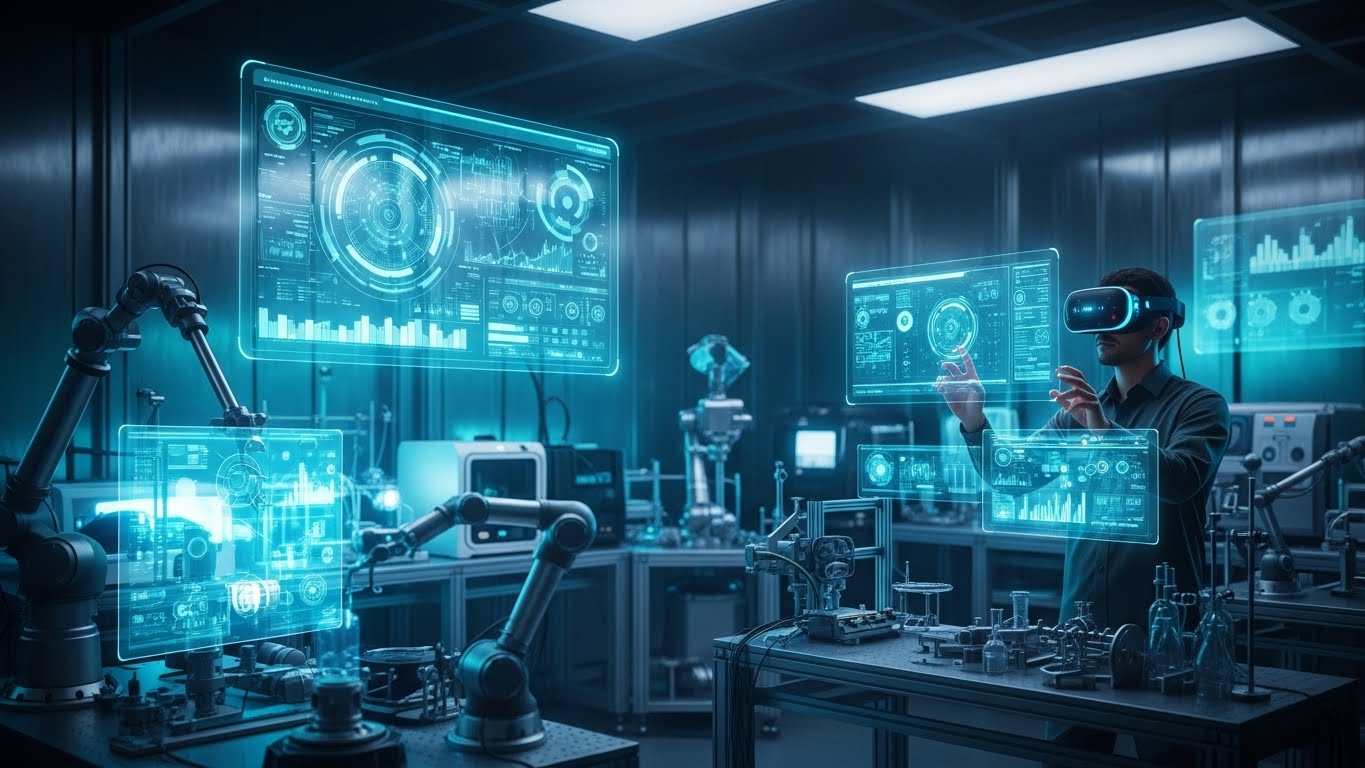

Technology has always been a cornerstone of human progress. From primitive tools to modern computers, innovation has consistently redefined how we live, work, and interact. Today, we are witnessing a remarkable era of transformation, driven by emerging technologies that promise to reshape the future. In this blog, we will explore the most influential technological advancements, their real-world applications, and how they are reshaping society.
Artificial Intelligence: The Brain Behind Modern Technology
Artificial Intelligence, or AI, is no longer just a futuristic concept; it is now an integral part of daily life. AI systems analyze massive amounts of data, detect patterns, and make decisions, often faster and more accurately than humans. Applications of AI range from virtual assistants that help manage schedules to complex predictive models that guide business and scientific decisions.
In healthcare, AI is revolutionizing diagnostics and treatment planning. Algorithms can identify diseases in medical images with astonishing accuracy and even suggest personalized treatment plans based on a patient’s genetic profile. In finance, AI detects fraudulent activity in real-time and optimizes investment strategies, ensuring better security and efficiency.
However, AI is not without challenges. Concerns about data privacy, ethical use, and job displacement are growing. It is essential to develop AI responsibly, ensuring that it complements human skills and contributes positively to society.
Quantum Computing: Unlocking the Power of the Future
Quantum computing represents a leap forward in computational power. Unlike classical computers, which use bits as 0s or 1s, quantum computers use qubits, which can exist in multiple states simultaneously. This ability allows quantum machines to solve highly complex problems far more efficiently than traditional computers.
The potential applications of quantum computing are vast. In medicine, quantum simulations can accelerate drug discovery by analyzing molecular interactions in ways classical computers cannot. In cryptography, quantum algorithms offer both unprecedented encryption capabilities and potential security challenges. Industries like logistics and energy could use quantum computing to optimize complex operations, reducing costs and increasing efficiency.
While still in its early stages, the development of quantum computing is moving rapidly. The technology promises a future where problems once deemed unsolvable can be tackled with unprecedented speed and accuracy.
Blockchain: A Revolution in Trust and Transparency
Blockchain technology is transforming the way we think about data and transactions. At its core, blockchain is a decentralized ledger that ensures transparency, security, and immutability. While commonly associated with cryptocurrencies, blockchain’s applications extend far beyond finance.
Smart contracts, powered by blockchain, automate agreements without the need for intermediaries. This can reduce costs, eliminate errors, and improve trust between parties. In supply chain management, blockchain can track the authenticity and origin of goods, ensuring quality and accountability. Even sectors like healthcare and government can benefit from transparent record-keeping and secure data sharing.
Blockchain represents a shift from centralized control to decentralized trust. By giving individuals more control over their data, it empowers a new era of accountability and efficiency.
The Internet of Things: Connecting the World Around Us
The Internet of Things, or IoT, refers to networks of interconnected devices that collect and exchange data. IoT is transforming everyday life and industrial operations alike.
In homes, IoT enables smart devices that enhance convenience and efficiency. Smart thermostats learn user preferences, wearable health trackers monitor vital signs, and connected appliances automate routine tasks. In industry, IoT supports predictive maintenance, real-time monitoring, and optimization of complex systems.
The growth of IoT raises important considerations for security and privacy. Every connected device is a potential entry point for cyberattacks. Ensuring secure networks and robust data protection protocols is critical as IoT becomes increasingly ubiquitous.
Virtual Reality and Augmented Reality: Immersive Experiences Redefined
Virtual Reality (VR) and Augmented Reality (AR) are revolutionizing how we experience the world. VR immerses users in fully digital environments, while AR overlays digital information onto the physical world. These technologies are transforming industries such as entertainment, education, healthcare, and professional training.
In education, VR can create interactive lessons that make complex topics more accessible and engaging. In healthcare, AR can assist surgeons by providing real-time visual guidance during procedures. In entertainment and gaming, VR and AR offer immersive experiences that were once unimaginable.
As these technologies continue to evolve, they will reshape human interaction, remote collaboration, and professional development, bridging the gap between the digital and physical realms.
5G Connectivity: Speeding Up the Digital World
The rollout of 5G networks is transforming communication and connectivity. 5G offers higher speeds, lower latency, and the ability to connect millions of devices simultaneously. These features enable advanced applications such as autonomous vehicles, smart cities, and seamless IoT integration.
High-speed connectivity enhances cloud computing, streaming, telemedicine, and remote work. It also empowers businesses to implement sophisticated automation, data analytics, and real-time monitoring, driving efficiency and innovation across sectors.
Despite its promise, 5G deployment requires significant infrastructure investment. Equitable access is essential to prevent a widening digital divide, ensuring that both urban and rural populations benefit from this technological advancement.
Sustainable Technology: Innovations for a Greener Future
As the world faces environmental challenges, sustainable technology is emerging as a key driver for a greener future. Renewable energy solutions such as solar panels, wind turbines, and advanced energy storage systems are reducing reliance on fossil fuels and minimizing carbon emissions.
Smart grids and energy management systems optimize power distribution, while precision agriculture uses data and sensors to improve crop yields and resource efficiency. Electric vehicles, supported by advancements in battery technology and charging infrastructure, are transforming transportation and reducing environmental impact.
Sustainable technology is not just an environmental imperative; it is a pathway to economic growth and improved quality of life. By investing in green innovation, society can balance technological advancement with ecological responsibility.
Cybersecurity: Safeguarding the Digital Era
As technology becomes more integrated into daily life, cybersecurity has become a critical priority. Cyber threats are evolving in sophistication, targeting individuals, organizations, and governments. Protecting sensitive data and ensuring the integrity of digital systems is essential for trust and safety.
Emerging technologies such as AI and machine learning are enhancing cybersecurity by detecting anomalies and anticipating threats. However, the same technologies can also be exploited by cybercriminals. Robust security practices, ongoing monitoring, and public awareness are key to maintaining a secure digital ecosystem.
The Ethical Dimension of Technology
The rapid pace of technological advancement brings ethical considerations to the forefront. Issues such as data privacy, algorithmic bias, AI accountability, and environmental impact demand thoughtful attention. Technology must serve humanity, not compromise ethical values or exacerbate inequality.
Developers, policymakers, and society share the responsibility of guiding technological growth. Ethical frameworks, transparency, and interdisciplinary collaboration are essential to ensure that innovation aligns with human needs and social values.
Conclusion: Embracing the Era of Innovation
The technological landscape is evolving faster than ever before. Artificial intelligence, quantum computing, blockchain, IoT, VR, AR, 5G, sustainable technology, and cybersecurity are shaping every aspect of human life. These innovations hold tremendous promise but also require careful consideration of ethical, social, and environmental impacts.
The future belongs to those who understand, adapt to, and harness technology responsibly. By embracing innovation with foresight and values-driven decision-making, we can ensure that technology remains a force for progress, empowerment, and a better world.
Technology is more than just machines and software—it is a reflection of human creativity, curiosity, and potential. As we navigate this era of rapid change, the choices we make today will define the world of tomorrow. The future is here, and it is ours to shape with wisdom, responsibility, and imagination.