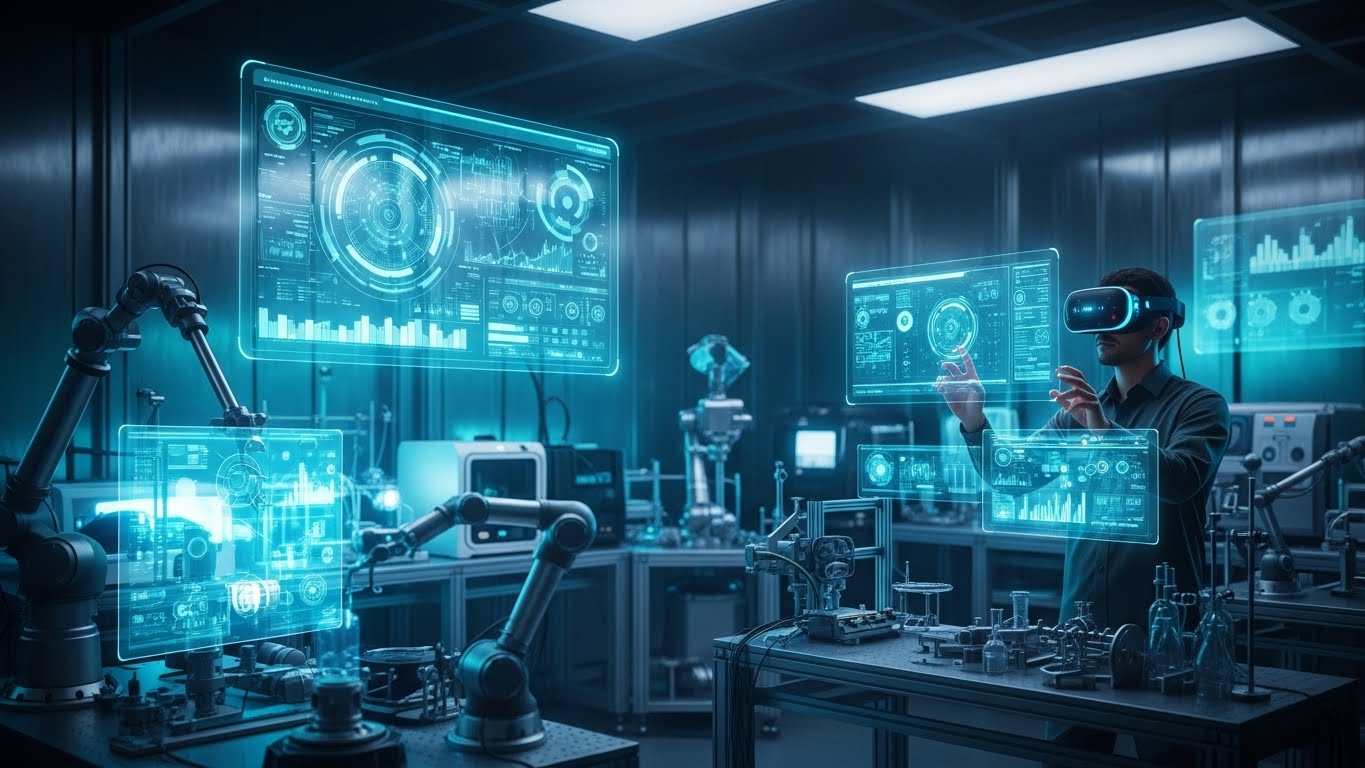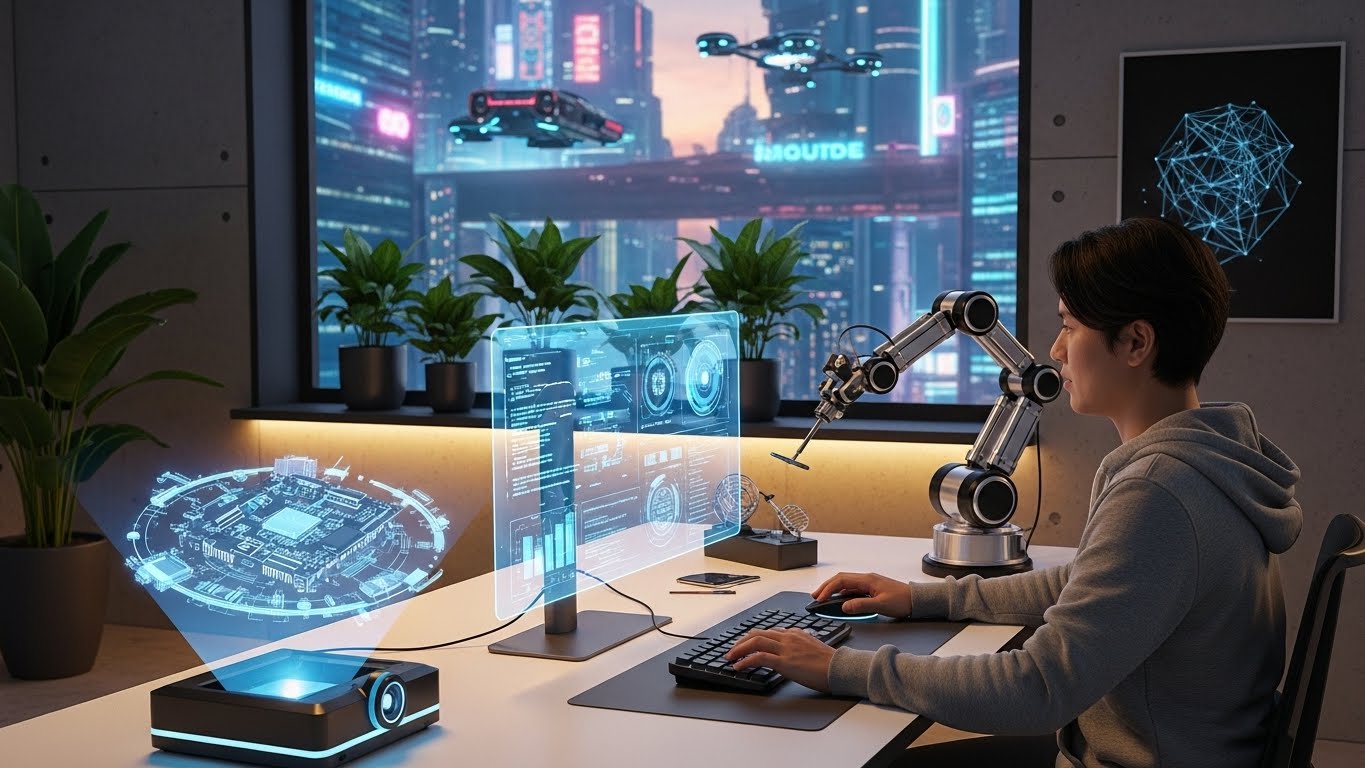

The rapid pace of technological advancement is shaping every facet of modern life. From healthcare to transportation, the world is witnessing a transformation that not only changes how we live but also redefines the future. As we move toward an increasingly digital and interconnected world, it’s important to understand the cutting-edge innovations that are fueling this change. In this post, we will explore some of the most exciting emerging technologies and their potential to reshape tomorrow’s world.
The AI Surge: Revolutionizing How We Live and Work
Artificial intelligence (AI) is one of the most influential technologies of the modern age, and its impact is only set to grow. While AI is often associated with robotics and autonomous systems, it’s making waves in a wide range of industries. AI algorithms can analyze vast amounts of data and make decisions faster and more accurately than humans, which is transforming fields like healthcare, finance, marketing, and even entertainment.
In healthcare, AI-driven systems can analyze medical images, predict disease outbreaks, and even help in the creation of personalized treatment plans. In finance, AI is being used to detect fraudulent transactions, optimize trading strategies, and enhance customer experiences. As AI continues to evolve, its role in the workforce will only increase, enhancing productivity, automating mundane tasks, and enabling more complex problem-solving. The AI revolution is happening right now, and its full potential is still unfolding.
Blockchain: Beyond Cryptocurrencies
While blockchain is most commonly associated with cryptocurrencies like Bitcoin, its applications go far beyond digital currency. Blockchain is essentially a decentralized, secure way to record transactions, ensuring transparency and trust without the need for intermediaries like banks. This makes it ideal for industries where transparency and security are crucial.
In supply chains, blockchain is being used to track goods from production to delivery, ensuring that consumers can verify the origin and quality of products. In healthcare, it’s being explored for managing patient data, enabling more secure sharing of information between hospitals and healthcare providers. Similarly, blockchain could revolutionize voting systems by ensuring that votes are securely recorded and tamper-proof.
As more industries explore the potential of blockchain, it’s clear that the technology has far-reaching implications that extend beyond finance. From legal contracts to property transactions, blockchain is poised to reshape the way we interact with digital systems.
5G Technology: The Future of Connectivity
The rollout of 5G networks marks a major leap forward in connectivity. With speeds up to 100 times faster than 4G, 5G is set to revolutionize everything from the way we use our smartphones to the development of new technologies. Unlike 4G, which offered faster internet for individual users, 5G will enable a vast network of connected devices to communicate in real time.
One of the most exciting implications of 5G is its ability to power the Internet of Things (IoT). As more devices—such as smart home gadgets, wearables, and connected cars—become part of our everyday lives, 5G’s ultra-fast speeds and low latency will allow these devices to work together seamlessly. This interconnectedness will enable smarter cities, more efficient public services, and greater convenience for consumers.
Moreover, 5G will enhance industries such as healthcare, where it will allow for the real-time monitoring of patients and enable remote surgeries with high precision. As the 5G network expands globally, it promises to reshape how we connect, work, and live.
Augmented Reality and Virtual Reality: Blurring the Line Between Real and Virtual Worlds
Augmented Reality (AR) and Virtual Reality (VR) have been gaining traction in recent years, and their applications are expanding beyond entertainment and gaming. AR overlays digital elements onto the real world, enhancing the way we interact with our environment. VR, on the other hand, immerses users in a completely virtual experience.
In retail, AR is already allowing consumers to try on clothes or visualize furniture in their homes without leaving their houses. In education, AR and VR are creating immersive learning environments where students can experience historical events or explore the human body in 3D. In healthcare, VR is being used for pain management and mental health treatments, while AR is assisting surgeons with complex procedures.
As both AR and VR technologies evolve, they are becoming more integrated into the ways we work and learn. This will undoubtedly lead to new opportunities in fields such as training, design, and entertainment, making these technologies some of the most exciting to watch in the coming years.
Autonomous Vehicles: Redefining the Way We Travel
Self-driving cars were once the stuff of science fiction, but they are now becoming a reality. The development of autonomous vehicles (AVs) has the potential to dramatically change the transportation industry, offering benefits such as reduced traffic congestion, fewer accidents, and greater mobility for individuals who can’t drive.
The key to self-driving cars lies in their ability to analyze vast amounts of data from sensors and cameras, enabling them to navigate safely through different environments. These vehicles are already being tested by companies like Tesla, Waymo, and Uber, and in some areas, they are already operating on public roads.
In the future, AVs could make transportation more efficient by communicating with each other and traffic infrastructure, reducing bottlenecks and improving traffic flow. Moreover, autonomous vehicles could be integrated with shared mobility services, reducing the need for individual car ownership and contributing to more sustainable urban living.
Wearable Tech: Empowering Health and Well-Being
Wearable technology has evolved from fitness trackers to advanced health-monitoring devices that can track everything from heart rate and sleep patterns to blood oxygen levels and even stress. Wearables like the Apple Watch and Fitbit have become popular tools for people looking to improve their health and fitness, but the possibilities extend far beyond simple activity tracking.
In healthcare, wearable devices are being used to monitor chronic conditions, such as diabetes and hypertension, in real-time. These devices can alert users to any abnormalities and even send data to healthcare providers for immediate analysis. Future wearables may be capable of detecting early signs of diseases like cancer or heart failure, enabling early intervention and better outcomes.
As technology continues to advance, wearables will become even more integrated into our daily lives, offering real-time health insights and personalized recommendations. The potential for wearables to improve overall well-being and support preventive healthcare is vast, making them a technology to watch in the years ahead.
Quantum Computing: Unlocking Unprecedented Computational Power
Quantum computing is still in the early stages of development, but it holds the promise of revolutionizing industries that rely on complex computations. Unlike classical computers, which use binary bits to process information, quantum computers use quantum bits (qubits), which can exist in multiple states at once. This enables quantum computers to solve problems that are currently beyond the capabilities of traditional machines.
One of the most exciting applications of quantum computing is in drug discovery. With its ability to simulate molecular structures at an unprecedented level of detail, quantum computing could significantly speed up the development of new medications. In fields like cryptography, quantum computing could potentially break encryption methods that are currently deemed secure, leading to the need for new, more robust security protocols.
Though quantum computing is still in its infancy, it has the potential to disrupt industries from finance to healthcare to logistics. As research continues, we may soon see breakthroughs that unlock new possibilities in computing power.
Conclusion: A Future Powered by Innovation
The technologies we’ve discussed are only a glimpse of the profound changes that are underway. As AI, blockchain, 5G, VR, autonomous vehicles, wearables, and quantum computing continue to evolve, they will shape how we interact with the world and each other in ways we are only beginning to understand.
While there are certainly challenges that come with the rapid advancement of technology—such as ethical considerations, privacy concerns, and the impact on the job market—the potential for positive change is immense. By embracing innovation responsibly, we have the opportunity to create a more efficient, sustainable, and connected world. The future is bright, and technology will continue to be the key that unlocks it.