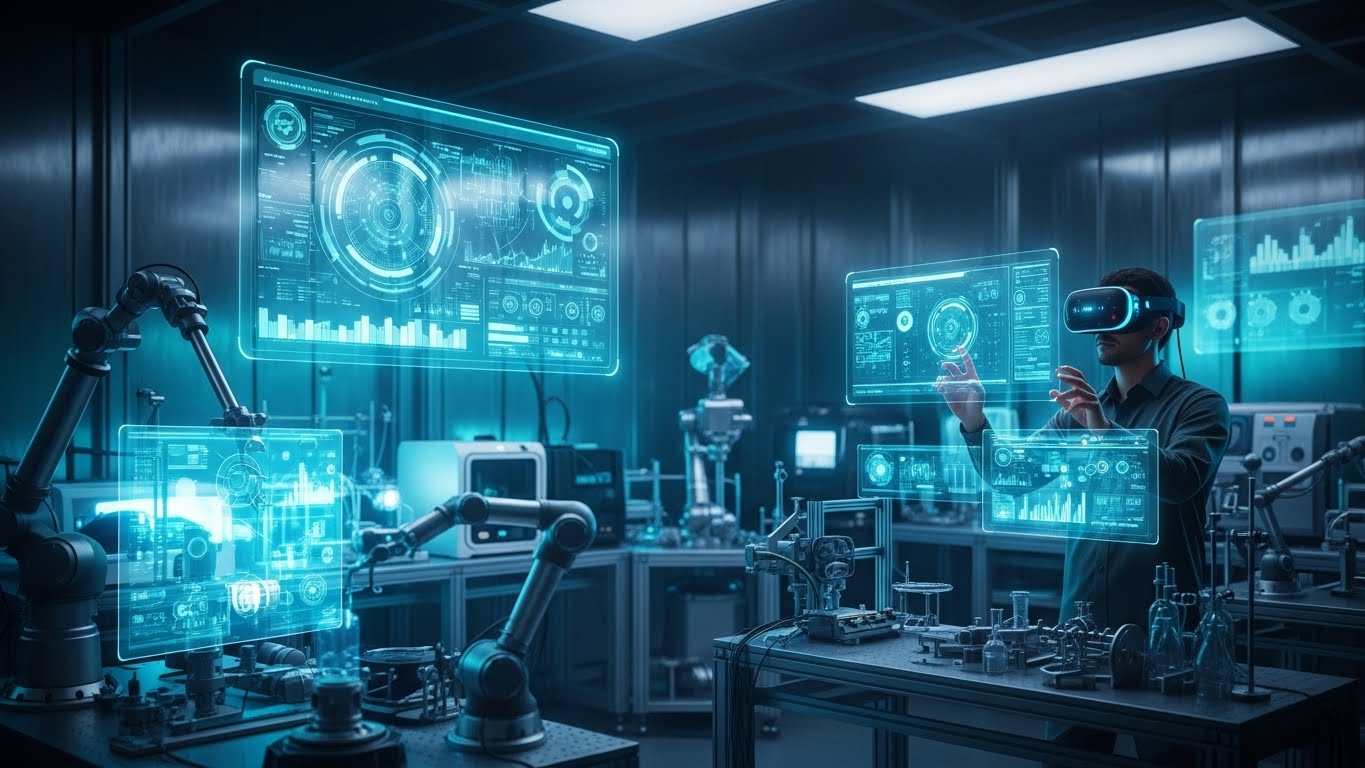

Technology is moving at a breakneck speed, and its impact is being felt in every facet of our lives. From smartphones to artificial intelligence, the digital landscape is transforming industries, societies, and the way we interact with the world around us. But with all these advancements, what does the future hold? In this post, we’ll explore the key technological innovations shaping our tomorrow and how they are changing the way we live, work, and connect.
The Rise of Artificial Intelligence: A Revolution in Thinking
Artificial Intelligence (AI) is no longer confined to science fiction movies—it’s very much a reality today. AI has permeated nearly every industry, from healthcare and finance to entertainment and transportation. Algorithms can now learn from vast amounts of data, make decisions, and even predict outcomes with remarkable accuracy.
In healthcare, AI is enabling faster diagnoses and more personalized treatments. In finance, it’s used to detect fraud and improve investment strategies. But despite its benefits, AI raises important questions around privacy, job displacement, and ethical considerations. As AI becomes more integrated into our lives, balancing its potential with responsible implementation will be essential.
The Internet of Things: A More Connected World
The Internet of Things (IoT) is connecting everything around us, from smart thermostats in our homes to wearable fitness trackers and autonomous vehicles. IoT refers to a network of physical devices embedded with sensors, software, and other technologies that allow them to connect and exchange data.
This new wave of connectivity is transforming industries and making daily life more convenient. Homes are becoming smarter, with devices that learn your habits and adjust your environment accordingly. In industries like manufacturing, IoT helps optimize operations and improve efficiency. However, as we embrace these connected devices, security and privacy issues must be addressed, as each new device adds another potential vulnerability to the network.
Blockchain Technology: Beyond Cryptocurrency
Blockchain technology has garnered a lot of attention due to its association with cryptocurrencies like Bitcoin, but its potential goes far beyond digital currencies. Blockchain is essentially a decentralized ledger that records transactions across multiple computers, ensuring transparency and security.
While cryptocurrencies are the most well-known application of blockchain, the technology is being explored for various other uses, including supply chain management, voting systems, and digital identity verification. Blockchain could revolutionize industries by offering more secure, transparent, and efficient systems. As blockchain continues to evolve, we may see it become the backbone of many industries, providing trust in an increasingly digital world.
The Power of 5G: Connecting the Unconnected
The rollout of 5G networks is one of the most anticipated technological developments in recent years. 5G promises to deliver ultra-fast internet speeds, reduced latency, and the ability to connect a vast number of devices simultaneously. This leap in connectivity will not only improve mobile experiences but also fuel the growth of IoT, augmented reality (AR), and virtual reality (VR) applications.
With 5G, streaming will become smoother, virtual interactions will feel more lifelike, and autonomous vehicles could rely on real-time communication to navigate safely. However, as with any new technology, the widespread adoption of 5G presents challenges, including infrastructure development, security concerns, and the need for new devices that support the higher speeds.
The Role of Technology in Sustainability
As the world faces climate change and resource depletion, technology is playing an increasingly important role in creating sustainable solutions. From renewable energy technologies like solar and wind power to electric vehicles and smart grids, innovation is driving the shift towards a greener, more sustainable future.
Tech companies are also focusing on reducing their environmental footprints, with many pledging to become carbon neutral in the coming years. Technologies like AI and big data are helping optimize energy usage, monitor environmental changes, and track carbon emissions. As we move forward, the goal will be to harness technology not just for profit but for the greater good of the planet.
The Digital Transformation of Education
Education is undergoing a digital transformation, with technology playing a crucial role in making learning more accessible and personalized. Online courses, virtual classrooms, and interactive learning platforms are revolutionizing the way we acquire knowledge. Students no longer need to be confined to traditional classrooms; they can learn from anywhere in the world.
Technology also allows for more personalized learning experiences, with AI tools that adapt to each student’s learning pace and style. Virtual and augmented reality are creating immersive educational experiences that make complex concepts easier to understand. However, as education becomes more digital, ensuring equitable access to these technologies will be essential in closing the education gap.
The Future of Work: Automation and Collaboration
The future of work is being shaped by technological advancements that are automating routine tasks and transforming collaboration. From robotic process automation (RPA) in businesses to AI-powered tools that streamline workflows, technology is increasing productivity and allowing workers to focus on more strategic and creative tasks.
At the same time, collaboration tools are evolving, with cloud-based software enabling teams to work together across geographies in real-time. Video conferencing, project management tools, and shared document platforms are making it easier for employees to collaborate, even in remote or hybrid work environments. The shift towards remote work has accelerated, and the technology behind it will continue to evolve to meet the changing needs of the workforce.
Virtual Reality and Augmented Reality: Reimagining Experiences
Virtual Reality (VR) and Augmented Reality (AR) are changing the way we experience entertainment, education, and even business. VR immerses users in a completely digital environment, while AR overlays digital elements onto the real world, enhancing what we see and experience.
In entertainment, VR is creating entirely new forms of interactive storytelling and gaming. In education, AR allows students to interact with virtual objects and simulations, making learning more engaging. Businesses are also adopting VR and AR for training, product demonstrations, and customer experiences. As these technologies become more advanced and accessible, the possibilities are endless.
The Road Ahead: What Lies in the Future of Tech?
The future of technology is full of exciting possibilities. From breakthroughs in AI and quantum computing to advancements in biotechnology and space exploration, the potential for innovation is limitless. However, as technology continues to evolve, it will be essential to address the challenges that come with it, from ethical concerns to ensuring equal access.
What’s clear is that technology will continue to play a pivotal role in shaping the world of tomorrow. Whether it’s improving healthcare, tackling climate change, or transforming the way we live and work, the digital age is only just beginning.
Conclusion: Embracing the Tech Revolution
As we navigate this rapidly changing world, embracing technology will be key to solving the problems of tomorrow. Whether we’re reimagining the future of work, advancing sustainability, or making the world more connected, technology offers us the tools to create a better future. The road ahead is full of challenges, but with innovation, collaboration, and responsible use, we can harness the full potential of the digital revolution.